
Some workplace moments stay with people for years. They are not always promotions, bonuses or major achievements. Sometimes, they are quiet acts of kindness that happen during an ordinary workday.
A colleague notices someone struggling. A manager shows up when no one expects it. A teammate protects someone’s dignity without asking for credit.
These moments remind us that strong teams are not built only on talent or targets. They are built on compassion, wisdom and human understanding.
Covering For A Colleague In Pain
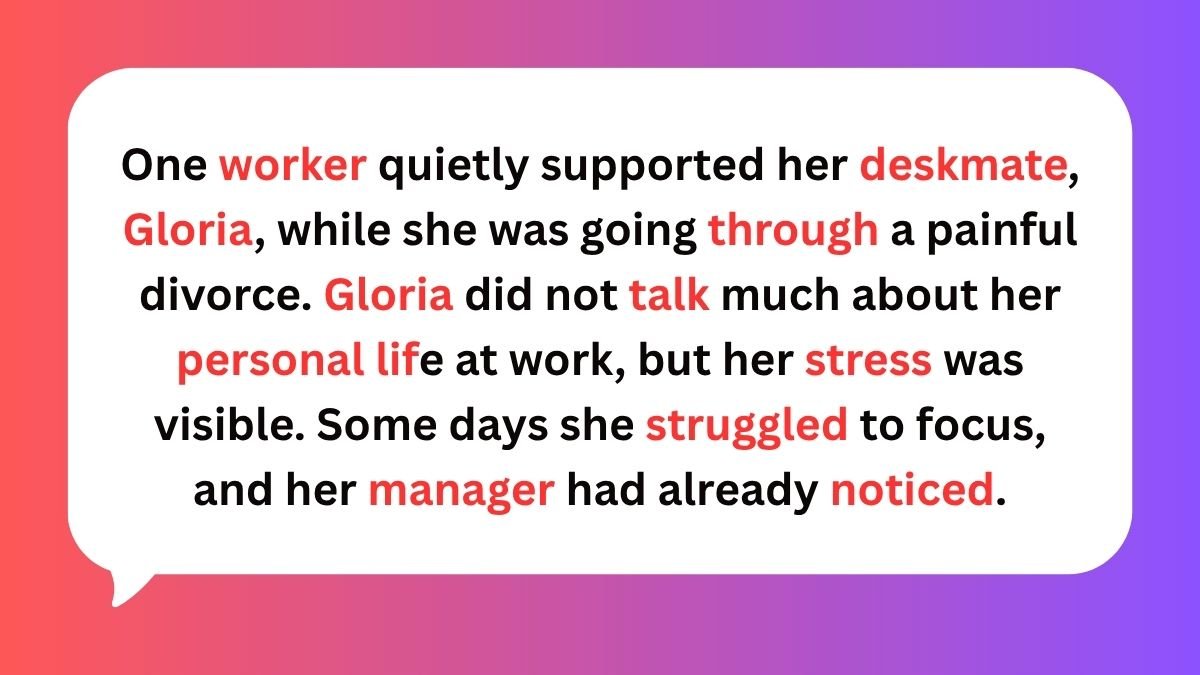
One worker quietly supported her deskmate, Gloria, while she was going through a painful divorce. Gloria did not talk much about her personal life at work, but her stress was visible. Some days she struggled to focus, and her manager had already noticed.
Instead of exposing her, the colleague quietly helped. She answered missed emails, protected deadlines and filled in updates during meetings without making it obvious.
Gloria later recovered and became one of the strongest people on the team. She never knew how much support she had received.
Giving An Intern A Chance To Shine
Another story involved a talented intern who had created most of the ideas for a client campaign but was terrified to present them.
A senior copywriter insisted she should present because the work was truly hers. They practiced for three evenings until she gained confidence.
On the presentation day, the intern delivered the idea clearly. The client loved it and later asked for her on another project.
Soon after, she received a full-time job offer. That moment showed how good leadership means opening doors for others, not taking credit from them.
A Boss Who Simply Showed Up
One employee was completing a PhD while working full-time in a new city. Her supervisor knew the defense date but said little beyond wishing her luck.
Then, on the day of the defense, she walked into the room and saw him sitting quietly in the back. He had travelled hours just to be there.
After she passed, he simply shook her hand and said he knew she would succeed. He did not make it about himself. He just made sure she was not alone.
Helping Someone Feel Included
In another workplace, weekly team lunches had become dominated by louder personalities. A quieter employee from another country began avoiding them because he felt invisible.
One colleague noticed and started skipping the group lunches too. They began eating together at the office instead.
Months later, the man admitted that those smaller lunches made him feel like he belonged. Sometimes inclusion does not require a big speech. It requires noticing who is being left out.
Fixing A Mistake Without Shame
A new event coordinator once made a serious vendor mistake, leaving a corporate event 40 chairs short. Her senior colleague did not shout or blame her.
She made urgent calls, paid a deposit with her own card and got extra chairs delivered just in time. After the event, she calmly explained what went wrong and how to prevent it next time.
That is what wisdom looks like at work: solving the problem first, teaching the lesson later.
Small Gestures That Carry People Through
Several stories show that kindness does not need to be dramatic. A teammate brought a new employee the exact coffee she liked every morning, making her feel seen during a lonely start.
Another colleague bought a desk fan for someone with hyperhidrosis, helping them stay comfortable without forcing an explanation.
A team recreated a missed celebration for a worker who had been at the hospital with her mother.
Another employee patiently helped a long-serving colleague learn new software, reminding her she was not too old for the job.
Support During A Vulnerable Moment
One new mother received a cruel message from her boss shortly after a C-section. But another colleague reported it, HR stepped in, and the boss apologised in person.
Even more importantly, coworkers arranged two weeks of home-cooked meal deliveries for her after she left hospital.
The workplace had shown both insensitivity and kindness, but the support from colleagues became the part she remembered most.
Conclusion
These workplace stories show that compassion can shape a team more deeply than rules, meetings or performance goals.
Great teams are built by people who notice pain, protect dignity, share credit, teach without shaming and make others feel they belong.
In the end, the best workplaces are not only efficient. They are human.