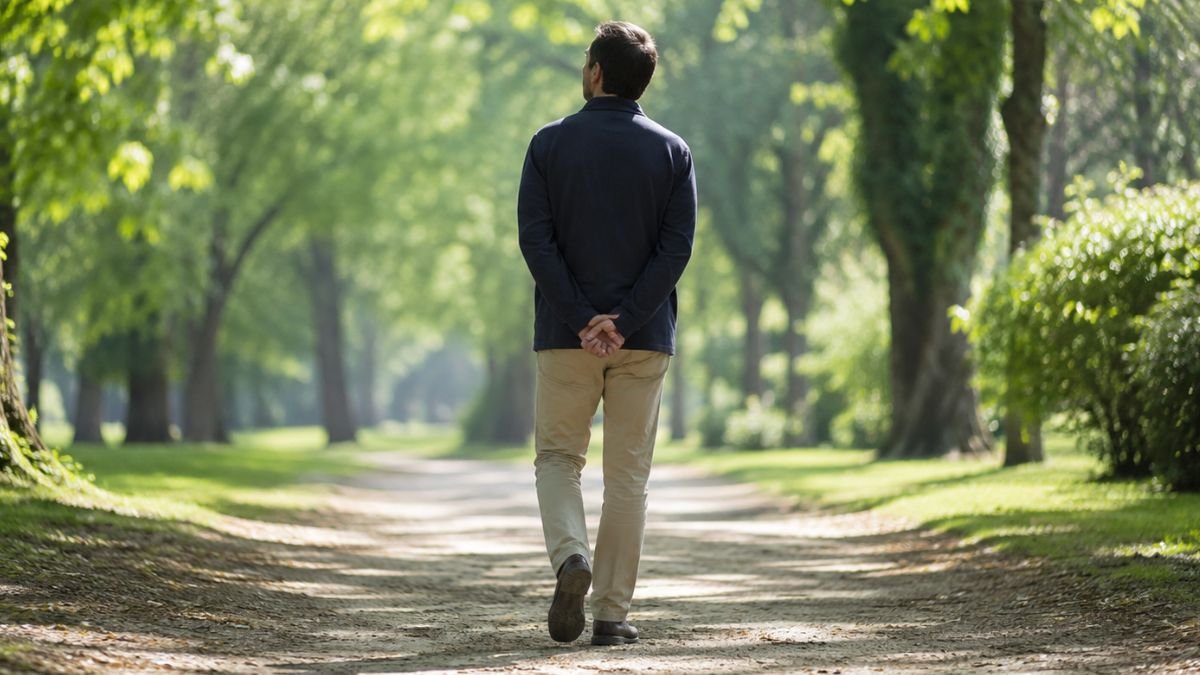

Some people naturally walk with their hands clasped behind their back. You may notice it in parks, museums, school hallways, quiet streets, or even during slow walks around the house.
From the outside, it can look serious, formal, or old-fashioned. But psychology suggests this posture is not always about trying to look important.
Often, it is simply a relaxed physical rhythm that helps the mind slow down. When someone walks this way, their body may be creating a calmer space for thought.
The hands are no longer fidgeting, reaching for a phone, pointing, or moving constantly. They are resting. And sometimes, when the body becomes quieter, the mind follows.
A Small Posture With A Reflective Meaning
Walking with hands behind the back does not reveal someone’s entire personality. It is not a secret code for wisdom, sadness, confidence, or authority. Still, in the right context, it can suggest reflection, self-control, or a desire to slow mental noise.
This posture often appears during calm walking, not rushed movement. A person may use it while thinking through a problem, observing something carefully, or giving themselves a break from the usual speed of the day. It can make the walk feel less reactive and more deliberate.
For some people, it is like placing the body in a “pause mode.” The hands are parked, the pace slows, and attention turns inward.
Walking Can Help Thoughts Move
The strongest psychological idea behind this habit may not be about the hands alone, but about walking itself.
Walking has long been connected to clearer thinking, creativity, and emotional reset. Many people pace when they are trying to solve a problem or take a walk when they need to cool down.
Movement can help ideas loosen. Unlike sitting at a desk with a phone, laptop, and constant notifications, walking creates a steady rhythm. The body moves forward, breathing settles, and the mind has space to organize itself.
When hands are placed behind the back, the movement may feel even quieter. There is less arm motion and less visual distraction.
This can make the walk feel more thoughtful, especially when someone is trying to process emotions or make sense of a decision.
Posture Can Influence Mood
Body position can also play a role in mood. While one posture does not create one exact emotion, the way people carry themselves can affect how they feel. A tense posture may increase discomfort, while a more open and steady posture may help some people feel grounded.
Walking with hands behind the back often comes with a straighter torso and slower pace. That combination may create a feeling of composure. It can signal to the body that there is no need to rush, defend, or react quickly.
This does not mean the posture magically removes stress. But small physical changes can sometimes help people regulate themselves. A slow walk, relaxed shoulders, and steady breathing can be enough to make thoughts feel less crowded.
The Brain Notices Where The Hands Are
The body and brain are closely connected. The brain constantly tracks where the hands, arms, and body are positioned. This is why different postures can feel different emotionally and mentally.
When the hands are behind the back, they are outside the usual active space in front of the body. They are not busy managing objects or reacting to distractions. This may help some people feel less mentally cluttered.
In everyday life, that small shift can matter. A person walking with hands behind their back may not be performing calmness. They may simply be choosing a body position that makes thinking feel easier.
Context Matters More Than The Gesture
It is important not to overread this habit. The same posture can mean different things depending on the situation.
Someone may walk this way because they are thinking deeply, but they may also be stretching their shoulders, avoiding fidgeting, following a workplace habit, or simply walking in the way that feels comfortable.
Body language is never a perfect translation of someone’s inner life. A person’s pace, facial expression, setting, culture, and mood all matter.
A grandparent strolling in a park, a teacher watching a hallway, and a nervous person waiting outside an office may all use the same posture for different reasons.
Conclusion
Psychology suggests people who walk with their hands behind their back are not always trying to look serious or dramatic. Often, they are adopting a slower, quieter physical rhythm that helps the mind reflect.
This simple posture may reduce fidgeting, support calm attention, and make walking feel more thoughtful.
It is not a diagnosis or a personality label. It is just a small human habit that can sometimes say: the mind needs space, and the body is helping it find some.