
When people think about space, they usually imagine advanced technology, astronauts floating in zero gravity, and breathtaking views of Earth from above. It all looks exciting and almost surreal. But behind that beauty lies a much harsher reality that is rarely talked about.
Living in space is not just physically challenging—it also puts the human body and mind under constant pressure. Astronauts have to deal with isolation, confined spaces, disrupted routines, and an environment that never truly feels natural. Over time, these conditions begin to affect them in ways that are not always visible at first.
A Constant State of Pressure That Never Really Stops
One of the biggest challenges of living in space is the continuous pressure astronauts experience. Unlike life on Earth, where people can step outside, change their surroundings, or take a break, space offers no real escape.
Astronauts are exposed to multiple stress factors at the same time. They live in small, enclosed areas, follow strict schedules, and work in an environment where even small mistakes can have serious consequences. This constant state of alertness builds up over time, making it harder to relax or mentally switch off.
Even though they are highly trained, the human body is not naturally designed to handle such long-term pressure without consequences.
How the Brain Starts to Respond to Extreme Conditions
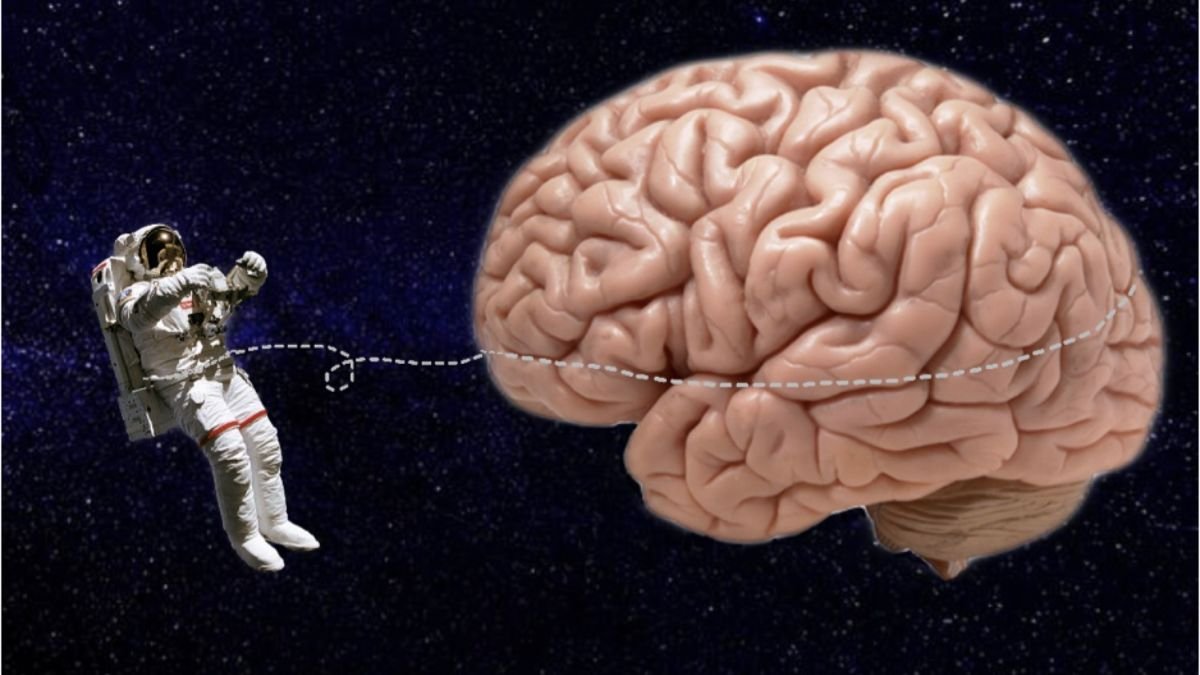
What makes this situation even more interesting is how the brain reacts to these conditions. Over time, exposure to stress, isolation, and unusual environments can begin to affect how the brain functions.
Astronauts may experience changes in focus, memory, and decision-making. Tasks that normally feel simple can become more demanding, especially when combined with fatigue and stress. These changes don’t happen instantly—they build slowly, often going unnoticed until they start to impact daily performance.
This shows how sensitive the human brain is to its environment, even in highly controlled and professional settings.
Living Without Real Human Connection
Another major challenge in space is the lack of normal social interaction. While astronauts are not completely alone, their social circle is extremely limited. They are confined to the same small group of people for long periods, with little opportunity to meet new faces or experience different environments.
Over time, this can create a sense of isolation. Even with communication systems in place, it’s not the same as being physically present with friends or family. The absence of everyday human interaction can make the environment feel even more confined and repetitive.
This highlights something that is often taken for granted on Earth—how important real human connection is in maintaining a sense of normalcy.
When Day and Night Stop Feeling Real
One of the most surprising challenges of space life is the disruption of the body’s natural rhythm. On Earth, people rely on the cycle of day and night to regulate sleep, energy, and overall balance. In space, this natural cycle is completely altered.
Astronauts often experience irregular sleep patterns because their bodies struggle to adjust to the environment. Without a clear sense of time, it becomes harder to maintain a consistent routine. This lack of proper rest can lead to fatigue, reduced focus, and slower reaction times.
Over time, the effects of poor sleep add to the overall strain of living in such an extreme environment.
Small Changes That Build Into Bigger Problems
Individually, each of these challenges might seem manageable. But in space, they all happen at once. Stress, isolation, disrupted sleep, and constant pressure combine to create a situation where even small issues can grow into larger problems.
What makes it more complex is that these changes don’t always appear immediately. They develop gradually, making them harder to detect and manage. This is why understanding these effects has become such an important part of preparing for long-term space missions.
Why This Matters Even Back on Earth
While these findings are based on life in space, they reveal something much broader about human behavior. Many of the same challenges exist on Earth, just in less extreme forms. Busy schedules, lack of social interaction, poor sleep, and constant stress are common in everyday life.
The difference is that on Earth, people have more control over their environment. They can step outside, meet others, or take breaks when needed. But the underlying effects show how important these simple actions are for maintaining balance.
A Different Way to Look at Human Limits
Space exploration continues to push the boundaries of what humans can achieve. But it also reveals how delicate the balance of the human system really is. The brain and body are capable of adapting to incredible situations, yet they still depend on stability, rest, and connection to function properly.
Understanding these challenges is not just about preparing astronauts for future missions. It also offers a deeper insight into how humans respond to pressure and how important it is to maintain balance, no matter where they are.
In the end, space doesn’t just test technology—it tests the limits of being human.
The detailed analysis has been published in Translational Psychiatry Space.