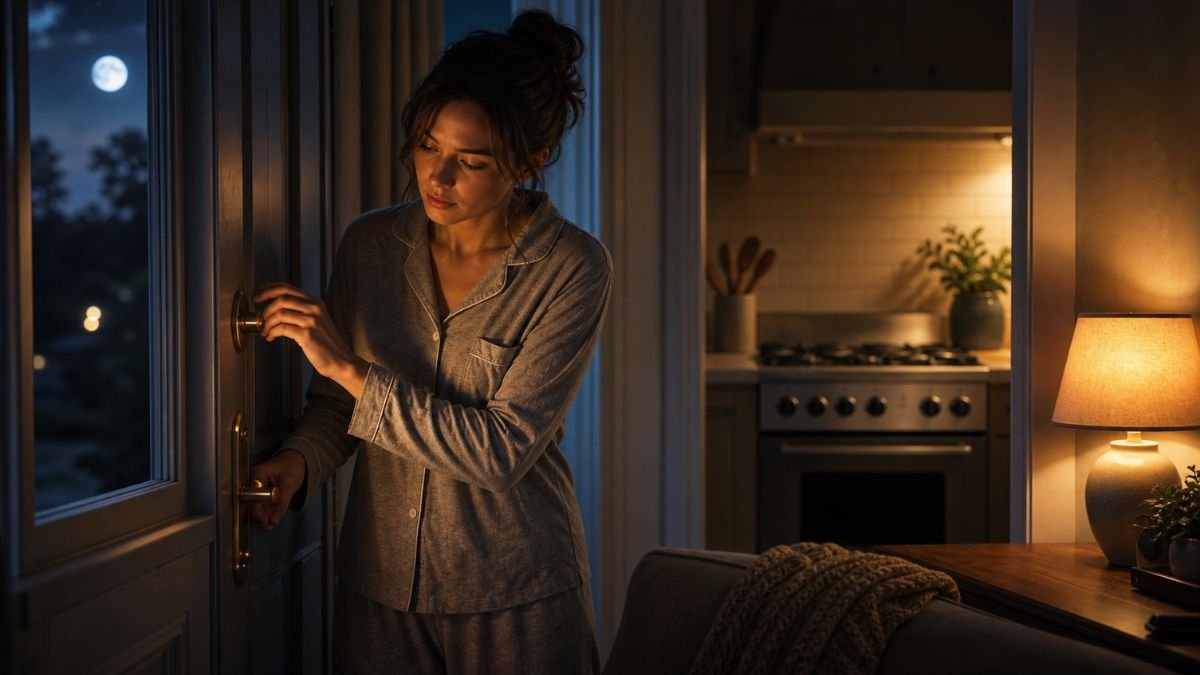

For many adults, bedtime is not simply about turning off the lights and going to sleep. They may walk toward the bedroom, pause, and suddenly wonder, “Did I lock the door?” or “Did I turn off the gas stove?”
Even after checking once, the thought may return. Some people check twice or even three times, despite knowing they probably already handled it.
At first, this can look irrational. But psychology suggests occasional double-checking before sleep is often not about obsessive-compulsive disorder. In many cases, it is the brain trying to create certainty before entering a vulnerable state: rest.
The Brain Dislikes Uncertainty
Human beings naturally dislike uncertainty. The brain is constantly trying to predict what might happen next, especially when safety is involved.
At night, uncertainty can feel louder because sleep means temporarily letting go of control. During the day, people can respond quickly if something goes wrong. But while sleeping, they cannot easily check, fix, or react.
That is why a simple question like “Is the door locked?” can feel urgent at bedtime. Checking creates a brief sense of relief because the brain receives proof that things are safe.
Checking Is A Form Of Reassurance
Double-checking often works like a reassurance behavior. The pattern is simple.
First, a doubt appears. Then the person checks the door, gas stove, window, alarm, or appliance. After checking, they feel relief.
The problem is that relief may not last long. The brain can quickly ask again, “But are you sure?” This can create a small reassurance loop, where the person checks again to feel calm enough to sleep.
This does not always mean something is wrong. It often means the brain wants one final signal that the environment is safe.
Survival Instincts Still Shape Modern Habits
Humans evolved to notice possible danger. In the past, threat detection helped people survive. Today, the threats are different, but the brain still uses the same protective system.
Instead of watching for danger outside, people check locks, gas knobs, appliances, chargers, alarms, windows, or smart home devices.
The objects have changed, but the emotional purpose is similar: “Can I safely relax now?”
Nighttime Doubts Feel Stronger
By the end of the day, the brain is tired. After work, responsibilities, decisions, screens, messages, and stress, mental energy is lower.
This is why a person may clearly remember locking the door earlier, but still doubt themselves later at night. The action did not change. Their confidence did.
When the mind is tired, even small uncertainties can feel bigger than they really are.
Unfinished Tasks Stay In The Mind
Psychology also suggests that unfinished tasks can occupy mental space. At night, anything that feels unresolved can become louder.
A gas stove, a door lock, or an open window may become a mental “open loop.” Checking helps close that loop, even if only temporarily.
For many people, this is less about fear and more about wanting the day to feel complete.
When Checking May Become A Problem
Checking once or twice before bed is common. It becomes more concerning if the behavior causes distress, repeatedly interrupts sleep, takes a long time, or feels impossible to control.
In those cases, speaking with a mental health professional may help, especially if the checking is linked with intense anxiety or obsessive thoughts.
Conclusion
People who check the gas stove or door locks before sleeping are not necessarily undisciplined or dealing with OCD. Often, they are trying to create certainty before rest.
Sleep requires letting go of control, and the brain naturally wants reassurance before doing that. For most people, occasional double-checking is simply a human attempt to feel safe enough to end the day.