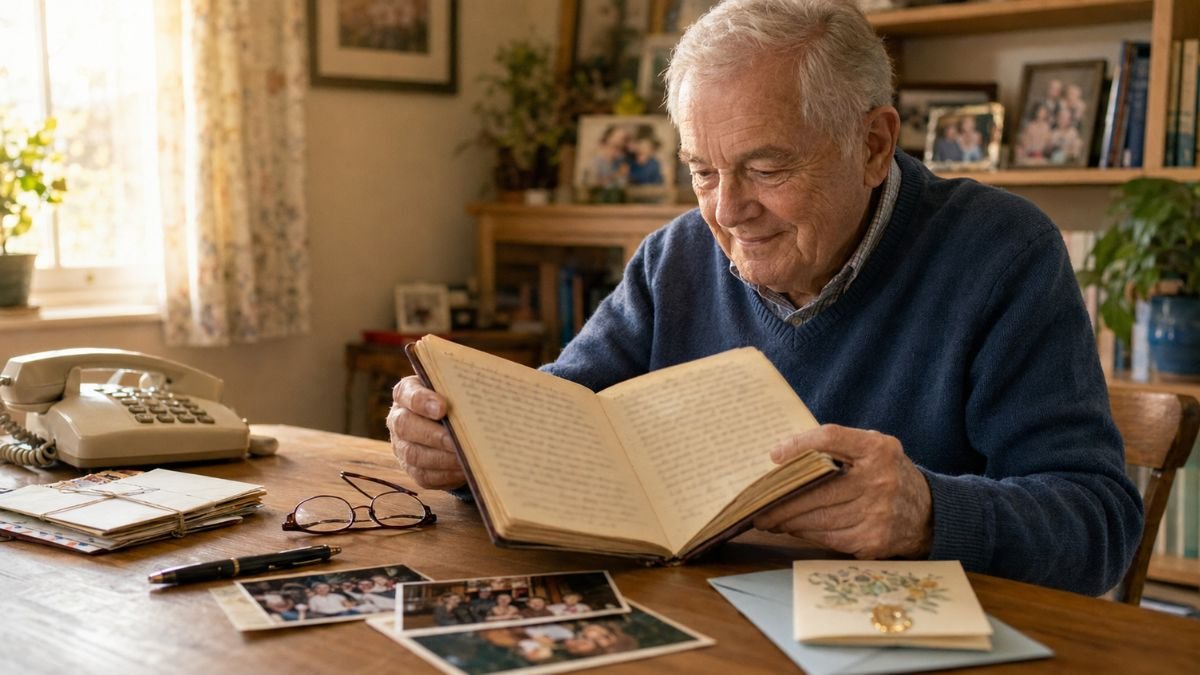

Most contact information is now stored inside smartphones, cloud accounts and social media profiles. However, many adults in their 60s and 70s continue writing names, addresses, birthdays and telephone numbers in traditional address books.
This habit may appear outdated to some people, but psychology suggests otherwise. A handwritten address book can provide a dependable memory aid while preserving easy access to relationships built across decades.
External Memory Aids Reduce Mental Effort
Research into everyday memory shows that older adults frequently use external tools such as calendars, notebooks, appointment books and reminder lists.
These tools do not necessarily indicate serious memory difficulties. Instead, they reduce the mental effort required to remember large amounts of information.
A person may have relatives, childhood friends, former colleagues, neighbours and community contacts accumulated over many years. Recording their information means every detail does not need to remain constantly available in memory.
Handwriting Can Make Information Feel Concrete
The act of writing involves physical and cognitive processes that differ from typing. Forming letters by hand, seeing words appear on paper and positioning information on a page can create a stronger sense of personal involvement.
This does not guarantee that every handwritten detail will be remembered. However, it may explain why information someone has physically written feels more familiar and secure.
Repeatedly returning to the same pages can also create visual cues. People may remember that a particular telephone number appears near the top of a certain page, making it easier to locate.
The Book Preserves Important Relationships
A handwritten address book stores more than telephone numbers. It may contain details belonging to family members, close friends, former neighbours and people connected to meaningful periods of someone’s life.
Older entries can reveal moves, marriages, changed names and relationships that have endured for decades. Crossed-out addresses and handwritten updates may quietly document the development of an entire social network.
The book therefore becomes a practical map of the owner’s relationships rather than merely a collection of data.
Physical Records Can Feel More Reliable
Digital tools are convenient, searchable and easily updated. However, they may also require passwords, charging, internet access, software updates or familiarity with changing interfaces.
A physical address book remains in the same location and works the same way every time it is opened. It cannot suddenly change its layout or require an account recovery process.
That consistency may offer confidence to someone who wants important information to remain immediately accessible. The person knows where the book is and how to retrieve what they need.
The Habit Reflects Adaptation
Keeping handwritten contacts should not automatically be interpreted as resisting technology. Many people who use smartphones also maintain physical records as a backup.
Psychology commonly views these systems as compensatory strategies. People adapt their environments so they do not need to depend entirely on unaided recall.
A trusted notebook can therefore represent practical self-awareness. Its owner understands which system feels easiest, most secure and most compatible with established routines.
Familiar Objects Can Carry Emotional Meaning
An address book used for many years can become emotionally significant. Recognising familiar handwriting or seeing the name of someone who has died may trigger memories that a digital contact entry cannot reproduce in quite the same way.
These associations can transform the book into a quiet record of friendship, family history and belonging.
Conclusion
People in their 60s and 70s who maintain handwritten address books are not necessarily out of touch. They may be using an effective external memory system built around visibility, familiarity and trust.
Behind every handwritten entry is something more meaningful than contact information: continued access to a relationship worth protecting.