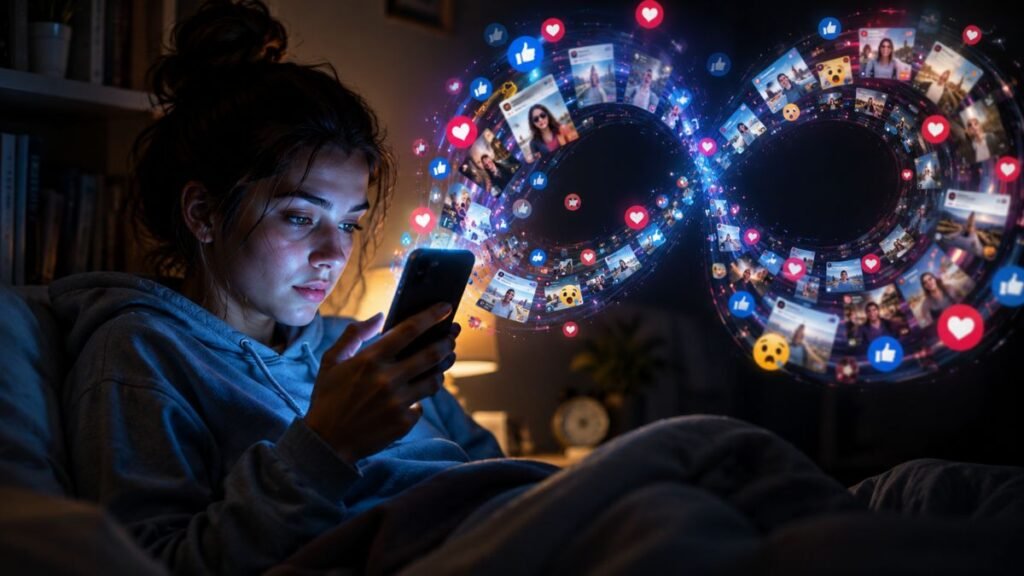
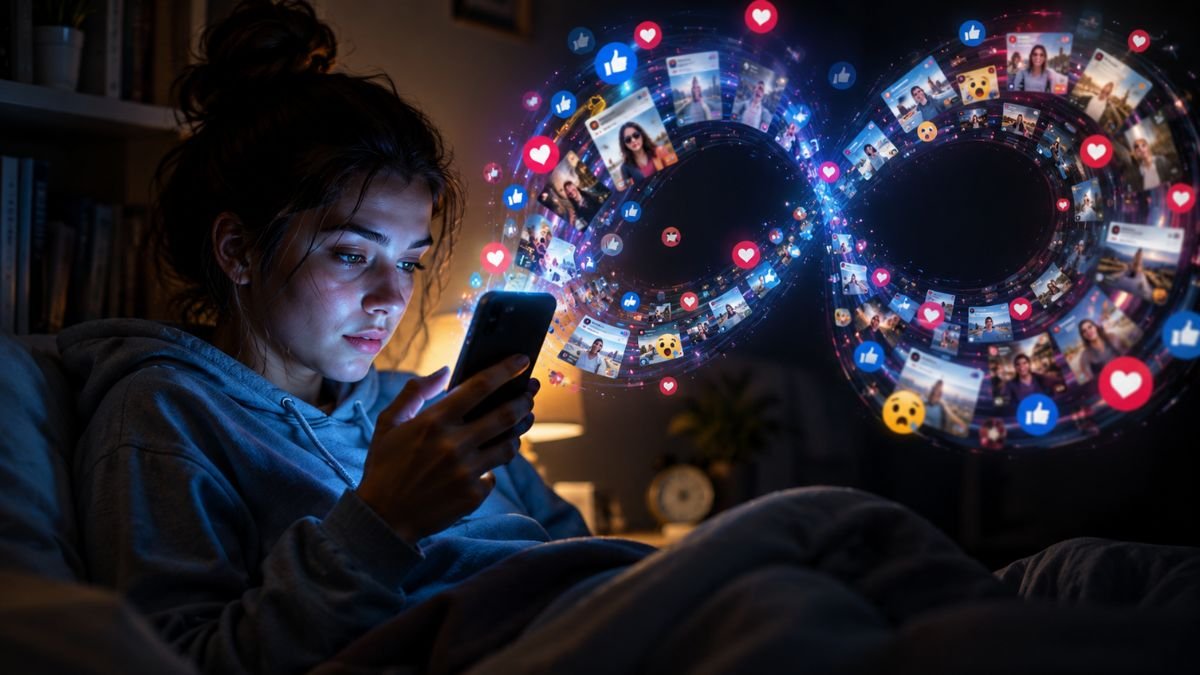

Many people spend hours each evening scrolling through Instagram, TikTok, Facebook, or X before bed. They watch videos, check updates, like posts, and follow the lives of friends, celebrities, and creators.
From the outside, this habit can look like poor discipline or boredom. But psychology suggests something deeper is happening. Social media platforms are designed to imitate social connection while keeping users engaged for as long as possible.
That is why scrolling can leave people feeling both full and empty. The brain receives signs of connection, but the heart often does not receive the emotional nourishment of real interaction.
The Brain Thinks It Is Socialising
When someone scrolls through social media, the brain sees faces, emotions, voices, stories, and personal updates. These are the same kinds of cues humans are built to notice in real-life relationships.
For a short time, the experience can feel social. A person may feel included, informed, or entertained. But most scrolling lacks true exchange.
No one is really responding. No one knows the viewer is there. The interaction is mostly one-sided.
This is why researchers often describe passive scrolling as “social snacking.” It gives a quick feeling of connection, but it does not fully satisfy the deeper human need to be seen, heard, and known.
Passive Scrolling Can Increase Loneliness
The problem is not simply the amount of time spent online. The pattern matters.
Passive use, such as scrolling, watching, and consuming content without direct engagement, has been linked to greater loneliness in several studies. It can make people feel close to others for a moment, then more isolated afterward.
Seeing other people’s highlights can also create comparison. Someone may watch friends travelling, celebrating, dating, or succeeding, while sitting alone at home. Even if the posts are harmless, the contrast can quietly deepen feelings of disconnection.
Active Use Is Not Always Enough
Messaging, commenting, and posting may feel more social than passive scrolling. In some cases, they can help people stay connected.
However, digital interaction still has limits. A comment is not the same as a conversation. A like is not the same as being comforted. A message thread may help, but it does not fully replace face-to-face presence, tone, touch, and shared time.
This is why even active social media use can sometimes become part of the loneliness cycle.
The Parasocial Trap Keeps People Returning
Social media also creates one-sided emotional bonds with influencers, creators, celebrities, and online personalities. These relationships can feel familiar and comforting, even though the other person does not know the viewer personally.
This temporary closeness can become powerful. Unlike real friends, the algorithm is always available. It does not cancel plans, get busy, or need emotional effort.
That reliability makes people return again and again, even when scrolling does not truly make them feel better.
Real Connection Requires Reciprocity
The deeper issue is reciprocity. Human beings need relationships where attention moves both ways.
A real conversation allows someone to be heard and answered. A real friendship includes presence, care, and response. Social media can support connection, but it cannot replace the emotional depth of being with someone who knows and responds to you.
People who spend hours on social media each evening are not simply lazy or undisciplined. Many are caught in a feedback loop designed to feel like socialising without fully meeting the need for connection.
The healthiest approach is not always deleting apps, but using them more intentionally. Instead of endless scrolling, people can choose real conversations, meaningful messages, and offline connection. The scroll may feel social, but real human contact is what truly fills the gap.