
People who reach retirement with only a few close friends are often judged unfairly. Many assume a small social circle means loneliness, failure, or poor relationship skills. But psychology suggests the truth can be very different.
For some people, having fewer friends later in life is not an accident. It is the result of a quiet decision made decades earlier: to stop maintaining relationships that felt shallow, draining, or meaningless.
Instead of collecting acquaintances, they chose emotional depth. And research suggests that this choice may be healthier than many people realize.
A Small Circle Does Not Always Mean A Lonely Life
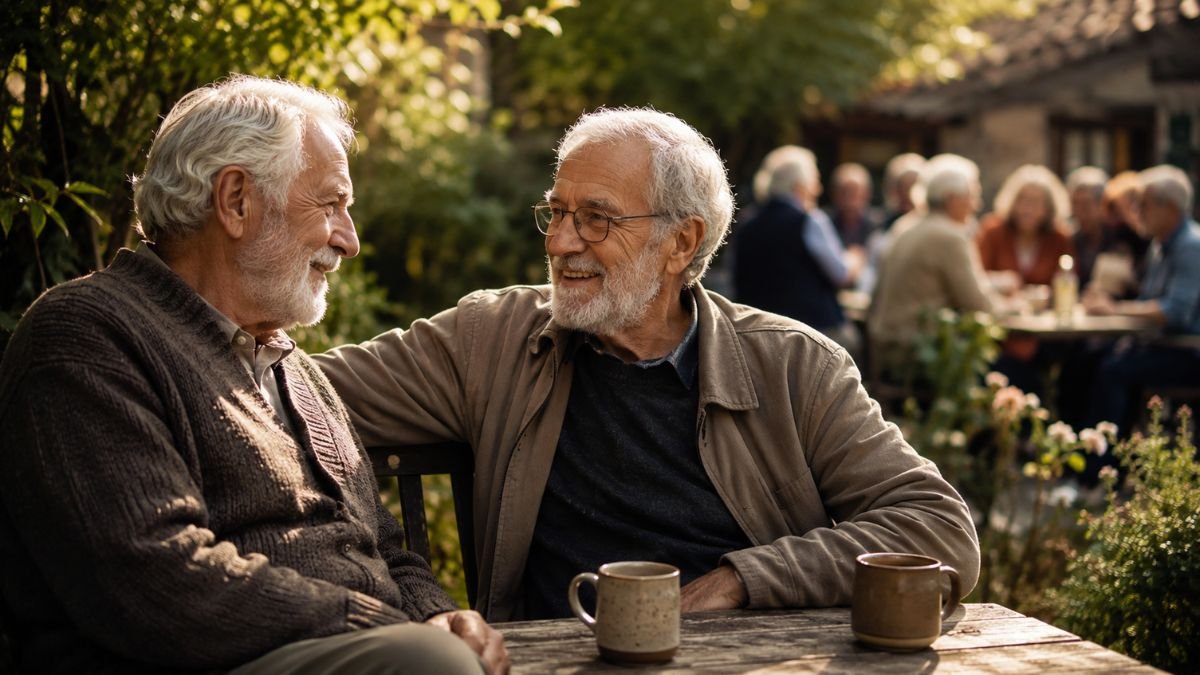
Retirement often brings a clear view of a person’s social life. Some people are surrounded by dozens of former colleagues, neighbors, and casual friends. Others have only two or three people they truly trust.
From the outside, the larger group may look more successful. But emotional satisfaction does not always come from numbers.
A person can know many people and still feel unseen. Another person can have only a few close friends and feel deeply supported. Psychology increasingly points to quality, not quantity, as the key factor in social well-being.
The Quiet Decision Many People Make In Their 30s
By the time people reach their 30s and 40s, they often begin noticing which friendships feel real and which ones survive only because of habit.
Some adults keep attending dinners, group chats, reunions, and social events even when the connection no longer feels meaningful. They continue because they do not want to seem rude, distant, or unsuccessful.
Others make a different choice. They stop forcing relationships that feel empty. They allow weak connections to fade and invest only in people who bring honesty, support, and peace.
That decision may shrink their social circle, but it can also protect their time and emotional energy.
Why Close Friends Matter More Than A Big Network
Research on aging and well-being has found that close friendships are more strongly linked to happiness than a large number of casual contacts.
This means that having many acquaintances may not improve life satisfaction if those relationships lack emotional closeness. What matters most is whether a person feels understood, accepted, and supported.
A wide social network can create the appearance of connection, but a close friendship creates emotional safety. That difference becomes especially important later in life, when time, energy, and priorities become clearer.
The Hidden Cost Of Maintaining Too Many Friendships
Keeping a large social circle can look positive, but it often comes with quiet costs.
There are dinners people do not enjoy, messages they feel pressured to answer, events they attend out of guilt, and relationships they maintain only because they have existed for years.
Over time, this kind of social maintenance can become exhausting. It may leave people with less time for family, hobbies, rest, or the few relationships that truly matter.
In retirement, many of those casual connections naturally fade anyway. Work friendships may disappear. Neighbors may move. Group routines may end. What remains are often the few bonds that were emotionally real from the beginning.
Why Society Judges Small Social Circles
Modern culture often treats a busy social life as proof of success. A full calendar, active group chat, and large circle of friends can make someone appear loved and socially fulfilled.
Because of that, people with smaller circles are often misunderstood. Others may assume they are isolated, difficult, or unhappy.
But a quiet life is not always a lonely one. Some people are simply selective. They prefer fewer relationships with more meaning over many relationships built on obligation.
This is not failure. It is self-awareness.
What This Means For People In Their 30s And 40s
If your social circle is getting smaller in your 30s or 40s, it does not automatically mean something is wrong.
Life changes. Priorities shift. Some friendships lose emotional value. Others become stronger. The important question is not, “Do I have enough friends?” The better question is, “Do I have the right friends?”
A few people who truly listen, support you, and make you feel safe may be far better for long-term well-being than a dozen people you only keep around because of history.
The Difference Between Isolation And Intentional Simplicity
There is an important difference between being isolated and being selective.
Isolation can feel painful, unwanted, and disconnected. Intentional simplicity feels calm, honest, and chosen.
People who choose a smaller circle usually still value connection. They just do not want to spend their limited time on relationships that feel fake or emotionally costly.
The goal is not to cut everyone off. The goal is to notice which relationships bring real connection and which ones only bring obligation.
Conclusion
Psychology says people who retire with few close friends are not necessarily failures at relationships. In many cases, they made a quiet decision years earlier to choose depth over social performance.
They stopped maintaining friendships that no longer felt meaningful and invested in the few people who truly mattered.
That choice may look unusual in a culture that celebrates popularity, but it can lead to a more peaceful and emotionally honest life.
A small circle is not always a sign of loneliness. Sometimes, it is proof that a person finally understood the value of real connection.