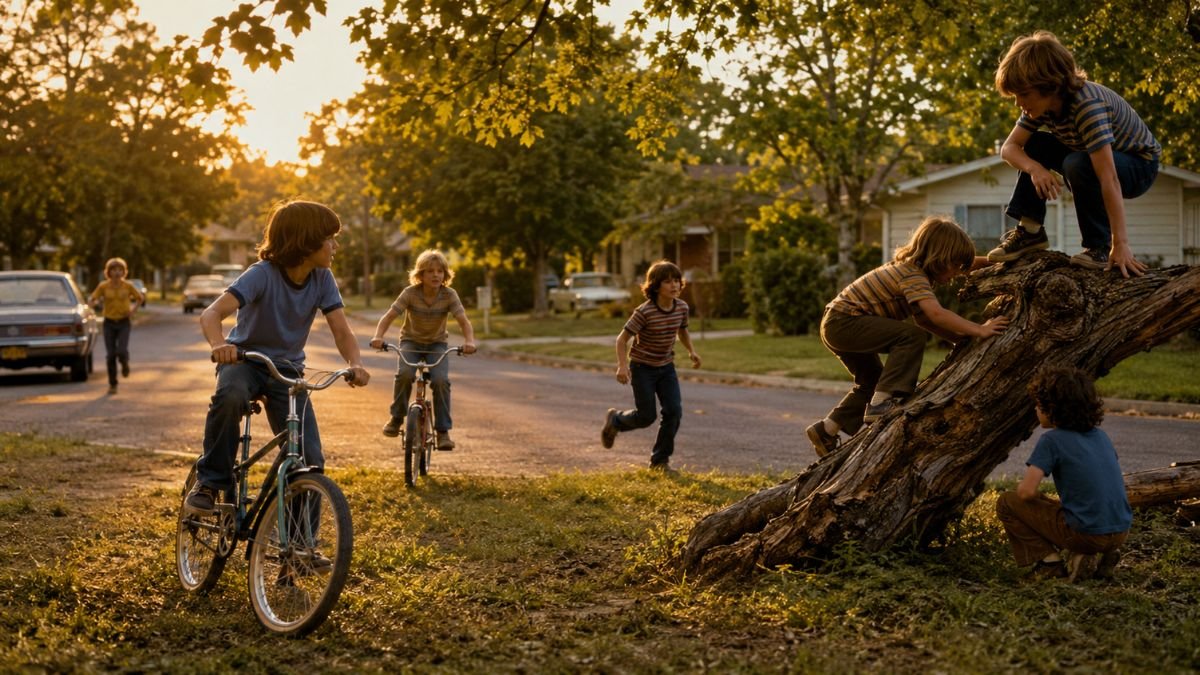

Many people who grew up in the 1960s and 1970s remember a childhood that looked very different from today. Children were often told to “be back by dinner,” then left to ride bikes, explore neighborhoods, settle arguments and invent games without constant adult supervision.
From a modern perspective, that level of freedom can look like neglect. But psychology suggests that some everyday independence may have helped children develop problem-solving skills, emotional regulation and resilience.
This does not mean serious neglect was healthy. Harmful neglect can damage a child’s development. But age-appropriate freedom, boredom and manageable challenges often gave children chances to practice coping without an adult immediately stepping in.
Modern Childhood Is More Managed
Today, many parents can track their children’s location, monitor school messages, supervise activities and intervene quickly when something goes wrong. This can make children safer in many ways, but it may also reduce opportunities for independence.
A growing body of research has raised questions about overprotective parenting. Some studies suggest that when parents become too controlling or too quick to rescue children from discomfort, young people may show higher levels of anxiety, sadness or social withdrawal later.
This does not mean involved parenting is bad. The issue is when support becomes constant control, leaving children with fewer chances to solve small problems on their own.
The Hidden Skill Is Self-Regulation
When people talk about resilience, they are often talking about self-regulation. This is the ability to manage emotions, handle frustration and make decisions without needing someone else to take over.
Children build self-regulation through practice. They learn it when they lose a game, argue with a friend, feel bored, climb something challenging or figure out what to do when plans change.
These moments are not always comfortable. But they teach the brain how to calm down, adapt and keep going.
For many children of the 1960s and 1970s, daily life included more of these unsupervised practice moments.
Why Free Play Matters
Unstructured play is one of the strongest examples of childhood independence. When children create their own games, negotiate rules and manage conflict, they practice social and emotional skills in real time.
Free play also teaches patience, imagination and risk judgment. A child deciding how high to climb, how far to ride or how to solve a disagreement is learning more than play. They are learning how to assess limits.
Modern children often have more scheduled activities, screens and adult-led environments. While these can be useful, they may leave less room for the kind of open-ended play that builds confidence and problem-solving.
Risky Play Is Not the Same as Danger
Psychologists and child development experts often distinguish between manageable risk and real danger. Manageable risk might include climbing, rough-and-tumble play, exploring nearby spaces or trying something slightly difficult.
These experiences help children understand their own abilities. They also learn that fear does not always mean stop. Sometimes it means slow down, think and choose carefully.
When adults remove every possible risk, children may miss chances to build judgment.
Why Kids Roam Less Today
The change in childhood is not only about parenting. Many parents are responding to real concerns, including traffic, safety fears, school rules and social pressure.
Neighborhoods may feel less walkable. Schools may limit rough play. Parents may fear judgment if they allow too much freedom. As a result, children often have fewer chances to move through the world independently.
This makes modern childhood more supervised, but not always more emotionally strengthening.
The Lesson Without Romanticizing Neglect
It is important not to romanticize the past. Some children from earlier generations experienced real emotional neglect, and many still carry wounds from being unsupported.
But the useful lesson is that children need opportunities to build independence. They need adults nearby, but not always in control. They need space to make choices, face small frustrations and recover from mistakes.
Resilience is not built by hardship alone. It is built through manageable challenges with enough safety in the background.
Conclusion
Psychology suggests that many children of the 1960s and 1970s did not become emotionally strong because parenting was perfect.
Many became resilient because daily life gave them more chances to self-regulate, solve problems and handle discomfort independently.
Modern comforts and protection have real benefits, but constant rescue can limit growth. The healthiest approach is not neglect and not overcontrol.
It is balanced freedom: enough support to feel safe, and enough independence to become strong.