
Last week, I called my friend Ruth right at 3 PM—precisely when her favorite courtroom show begins. “Can I call you back in an hour?” she asked, sounding slightly apologetic. “Judge Mathis is on.” After hanging up, I couldn’t help but reflect on how many of my friends over 70 follow similarly strict television routines—and more importantly, why they seem so protective of them.
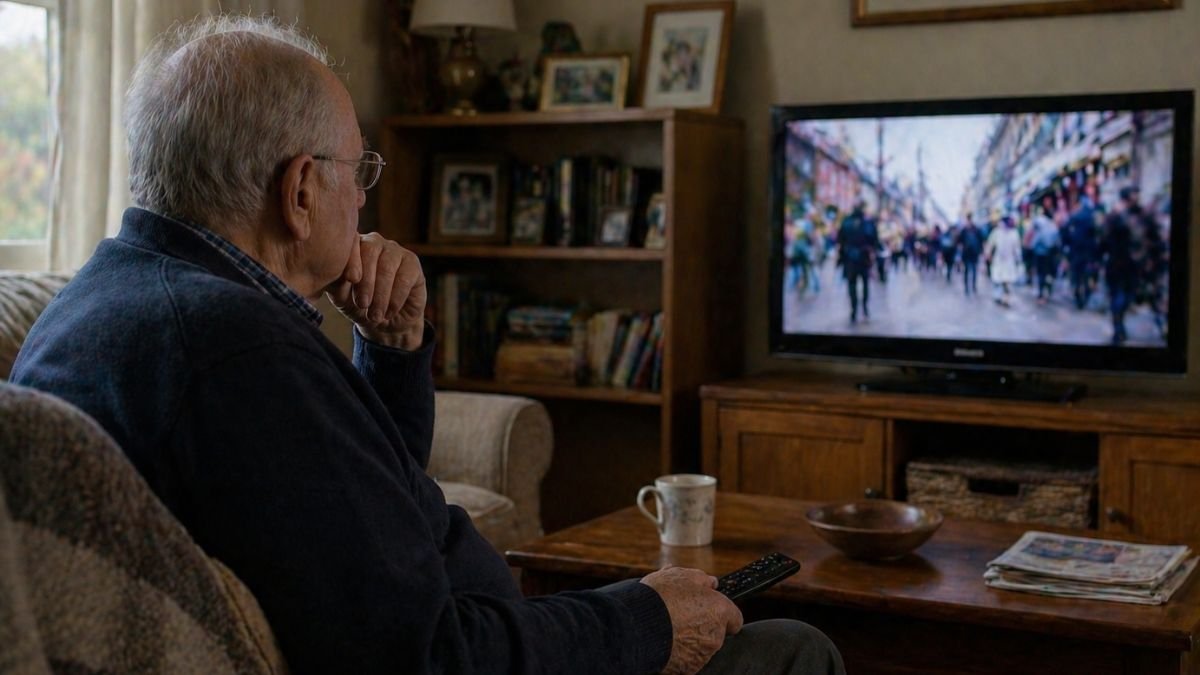
What’s happening here goes beyond simple entertainment or habit. After decades of playing essential roles in daily life—whether as parents, professionals, or caregivers—many older adults experience a subtle yet profound sense of loss: the feeling of no longer being needed at specific times by specific people. Television, with its consistent schedule and familiar personalities, often fills that empty space.
When Structure Becomes a Lifeline
Consider the structure of a working life. For more than three decades, I knew that students would be seated in my classroom at 8:15 AM, expecting me to teach them about writing and analysis. They needed me there—not eventually, but at that exact moment. That kind of obligation shapes your entire sense of purpose.
When retirement arrives, or when children leave home, or when a partner passes away, that structured framework doesn’t gradually fade—it disappears abruptly. The resulting silence is not just about quietness; it’s about no longer being essential to someone else’s routine. A friend once described it perfectly: “I wake up and realize nothing bad will happen if I stay in bed all morning. No one is relying on me to be anywhere.”
Research has shown that older adults who watch television for extended periods—four hours or more daily—may face a higher risk of cognitive decline. But perhaps television is not the root cause. Instead, it may be a response to the disorientation that comes with losing a sense of daily necessity.
The Comfort of Artificial Deadlines
My neighbor, a retired surgeon, follows a strict viewing routine: morning news at 7, midday updates at 12, and evening broadcasts at 6. “It gives my day structure,” he admitted. For decades, his life was organized around surgical schedules and patient care. Now, television programming provides a similar rhythm.
This behavior is not about idleness or lack of creativity. It is a natural adjustment to the loss of structured responsibility. Television schedules offer something that hobbies or social activities often cannot: a fixed point in time, a reason to show up somewhere at a specific moment.
The Hidden Cost of Constant Viewing
However, there are complexities to consider. Research from Becca Levy suggests that increased television viewing among seniors may reinforce negative perceptions of aging.
I saw this effect in my own mother. Over time, as she watched more television, her outlook began to reflect the pessimistic narratives often portrayed in media. Advertisements influenced her choices, and her expectations about aging became more limited.
Studies have also indicated that older adults who watch television alone may feel more isolated than those who watch with others. Instead of reducing loneliness, solitary viewing can sometimes intensify it.
Finding Meaning in Witnessed Moments
Despite these concerns, it is difficult to dismiss television entirely. Humans have an inherent need to witness and to be witnessed. When my students presented their work, part of its value came from having an audience to acknowledge their effort.
Television, in its own way, also relies on its audience. Performers and presenters broadcast their stories expecting someone to watch and care. One member of our book club expressed this beautifully: “I feel like the characters on my show need me to care about what happens to them.” She understands the difference between fiction and reality, but she has found a way to maintain a sense of connection and purpose.
Breaking the Cycle Without Losing the Person
Medical experts, including Andrew E Budson, have linked prolonged television viewing to increased risks of conditions such as dementia. While this highlights the need for change, simply turning off the television is not a complete solution.
The deeper issue lies in the need for structure and purpose. Some individuals have found meaningful alternatives by transforming passive viewing into active engagement. One friend began writing a daily blog reviewing television programs. Another started hosting group viewing sessions, turning a solitary activity into a social one.
The key is not to remove structure but to enrich it with real human interaction.
Rebuilding a Sense of Purpose
I often think of a friend who volunteers at the local library, reading to children every Thursday morning. “They expect me,” she says proudly. “If I’m not there, they ask about me.” She has rediscovered what it feels like to be needed—not by a schedule, but by people who notice her presence.
The Paradox of Modern Connection
Today’s world offers more ways to connect than ever before, yet many older adults feel increasingly isolated. Communication has shifted from phone calls to text messages, families are often geographically distant, and workplace-based friendships fade after retirement.
In this context, television becomes a reliable constant. But rather than viewing it solely as a problem, it may be more useful to understand what it represents—a need for connection, structure, and purpose.
Final Thoughts
Yesterday, instead of turning on the morning news, I sat quietly with my tea and watched birds gather at my feeder. They arrived at predictable times, relying on the seeds I provide. It offered a different kind of routine—one connected to the natural world rather than a screen.
The reality is that everyone needs purpose and structure, regardless of age. For those who have spent years being essential to others, transitioning to a life where they feel optional can be deeply challenging. Television may serve as a substitute, but it is only a partial one.
The real challenge is not eliminating television habits but creating meaningful opportunities where individuals feel genuinely needed again—where connection is real, and purpose is woven into everyday life.